
「Green Bullchain」 Eclipse TGE Is Coming, Is Ethereum's New Savior Here?





The self-proclaimed Solana on Ethereum, the "beef chain" Eclipse, gathered over 1000 participants in its recent Discord community AMA, revealing that the TGE token's ticker symbol is $ES and hinting that Eclipse's TGE may be imminent. This article will provide a preliminary introduction to what this green "beef chain" is and how it has emerged among the myriad Layer 2 solutions.

What Is Eclipse?
Eclipse is a blockchain platform developed by Eclipse Labs, operating on Ethereum's Layer 2 and being the first SVM chain allowed on Ethereum's L2. Its goal is to combine Solana's fast execution capabilities with Ethereum's liquidity and security, providing developers with an efficient, robust environment to build decentralized applications.
Vijay Chetty serves as Eclipse's CEO, previously holding business development roles at Uniswap and dYdX, as well as having worked at BlackRock and Ripple. Chief Technology Representative Ben Livshits also has a strong background, having served as VP of Research at zkSync, Chief Scientist at the Brave browser, a research scientist at Microsoft Research, and an associate professor at Imperial College London.
It has gone through three rounds of funding, with the latest Series A round raising $50 million at a $10 billion valuation, led by notable VCs like HackVC and PolyChain, with participants including OKX Ventures, Bankless Ventures, Delphi Digital, among others. The luxurious team lineup combined with the lavish funding lineup has created high expectations for Eclipse in the market.
Notably, Eclipse's highly recognizable mascot "Turbo the Cow" is inspired by Eclipse's powerful sequencer model known as the "beefy sequencer," seen as a critical part of the platform's technical foundation, giving the mascot a distinctive and charismatic personality.

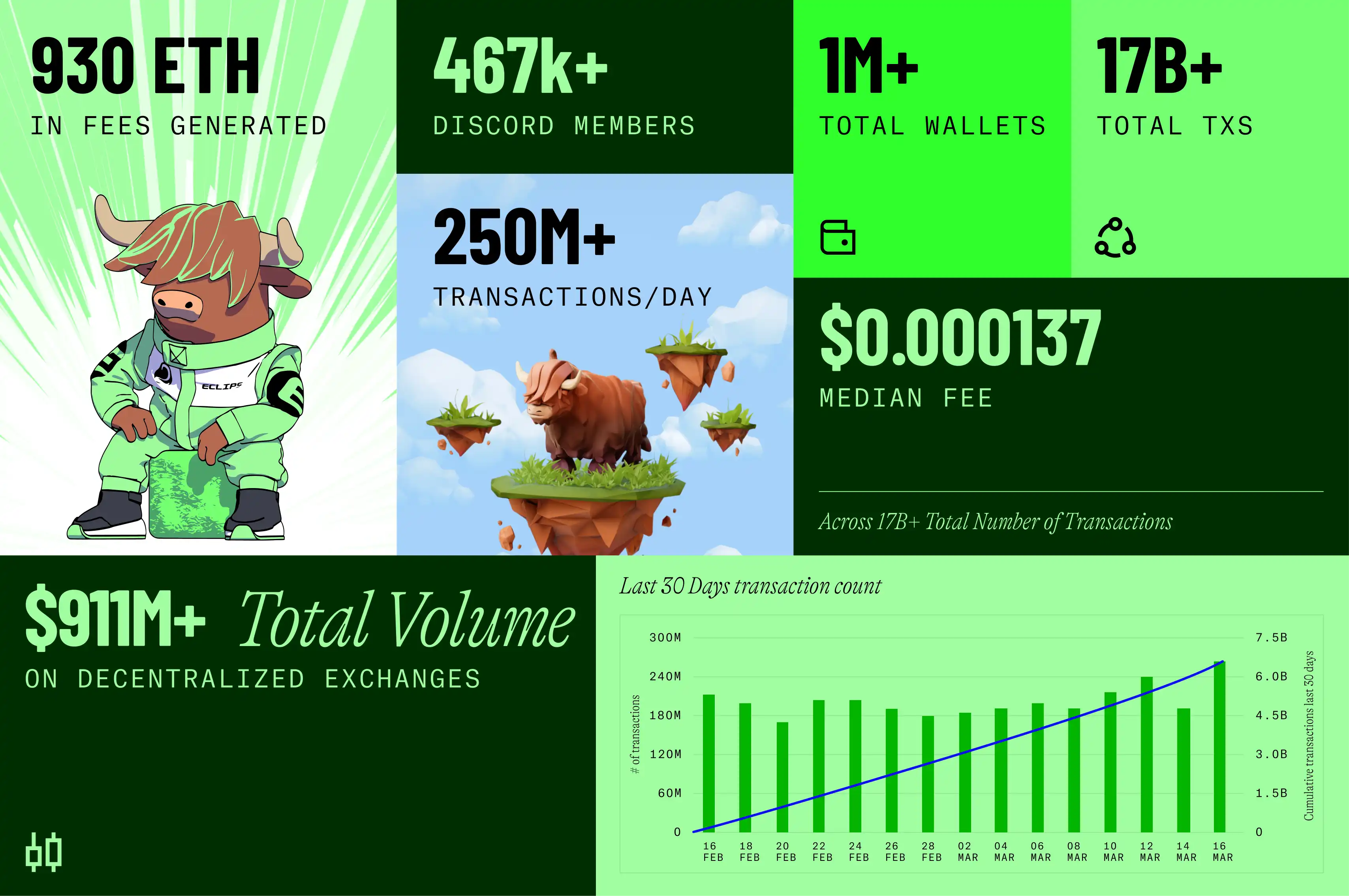
Since its mainnet launch in November last year, the platform has generated 930 ETH in fees, with over 467,000 Discord members, and over 1 million wallets participating, accumulating over 17 billion transactions. Eclipse processes over 250 million transactions per day, with DEX trading volume exceeding $9.11 billion, and daily transaction counts fluctuating between 120 million and 240 million.
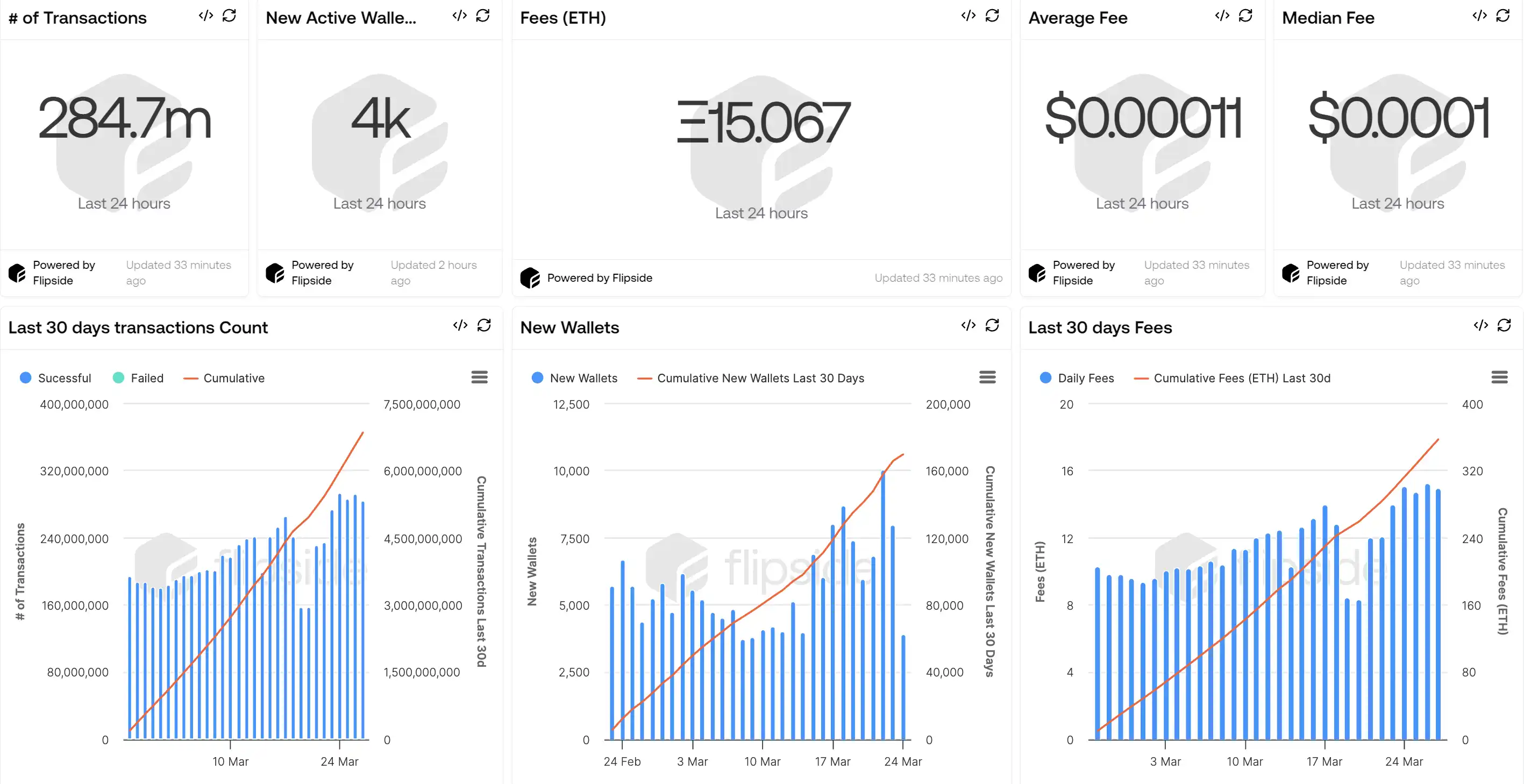
Looking at the on-chain data, both the number of transactions and the creation of new wallets continue to show a significantly robust growth curve, almost presenting an angle of more than 45 degrees on the chart.
Solana on Ethereum?
For those who desire both the security and liquidity of Ethereum as well as the high-speed processing of Solana, how does Eclipse achieve this? This brings us to the concept of GSVM (GigaScale Virtual Machine) officially proposed by the team.
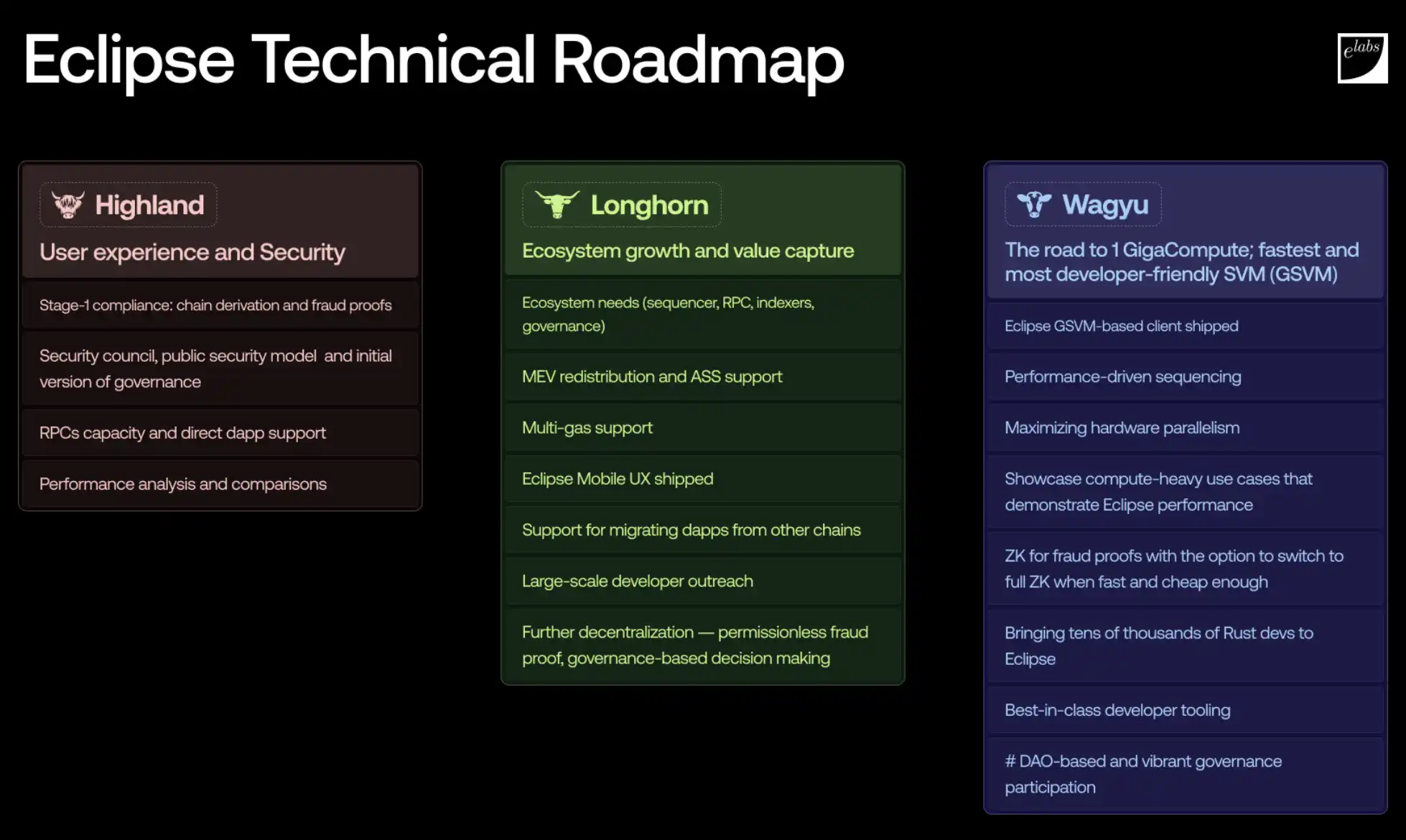
Traditional ETH Layer 2 solutions such as Optimistic Rollup are limited by the EVM's serial execution and hardware adaptability. Therefore, Eclipse created GSVM to achieve a similar level of performance to Solana's Sealevel parallel runtime but in L2 form, through a combination of software and hardware design, cross-layer optimization, and four major innovations: "Software-Hardware Co-Design," "Dynamic Scaling and Hotspot Isolation," "Cross-Layer Optimization," and "Computational Abstraction and Parallelism," establishing a strong technological moat.
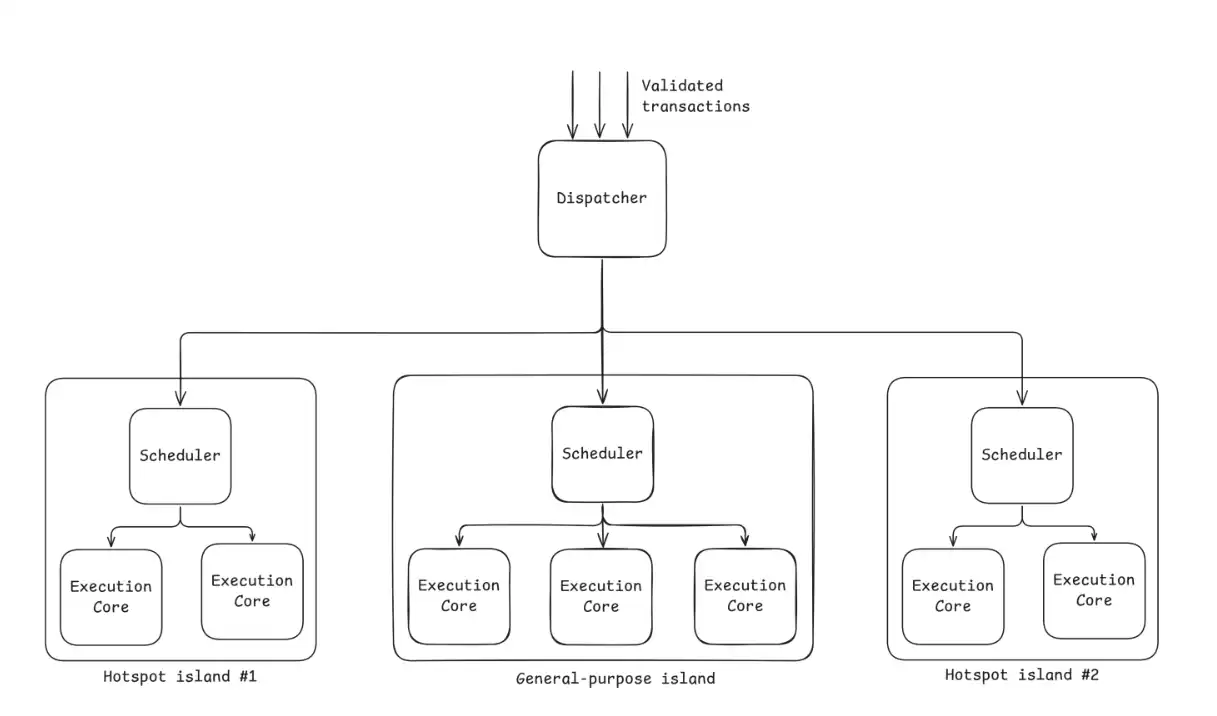
In simple terms, if Ethereum can be likened to a traditional city's main road with strict traffic rules and high tolls, and Solana to Germany's autobahn with multiple parallel lanes and lower tolls, then Eclipse is akin to a high-speed highway built on the main road, with entry and exit points requiring passage through the main road.
The "Software-Hardware Co-Design" equips vehicles with smart engines (GPUs/FPGAs) and automatic navigation (SmartNICs) that adjust speeds automatically based on road conditions. When a heavy truck (complex contract transaction) passes through, a dedicated lane is opened with computational acceleration, while a regular car (simple contract transaction) uses the general fast lane. The "Dynamic Scaling and Hotspot Isolation" feature dynamically allocates CPU resources, directly increasing the highway lanes during peak periods. If there are popular projects, this segment of the road can be isolated as a hotspot, providing resources without impacting the entire chain's operation. The "Cross-Layer Optimization" ensures real-time data exchange among high-speed gas stations, repair stations, etc. By prefetching transaction data to instruct the gas stations to prepare gas in advance and utilizing AI for "enhanced scheduling," potential traffic congestion or damage in certain blocks can be predicted in advance. "Off-chain computation + On-chain proof" delegates complex computations to off-chain processing, where toll booths (Ethereum's main road) use license plate verification (ZK proof) to allow vehicle passage.
Through the above path, Eclipse elevates data security and processing efficiency to the highest level, enabling it to handle more widely adopted large-scale applications, making it more suitable for the current App era of blockchain.
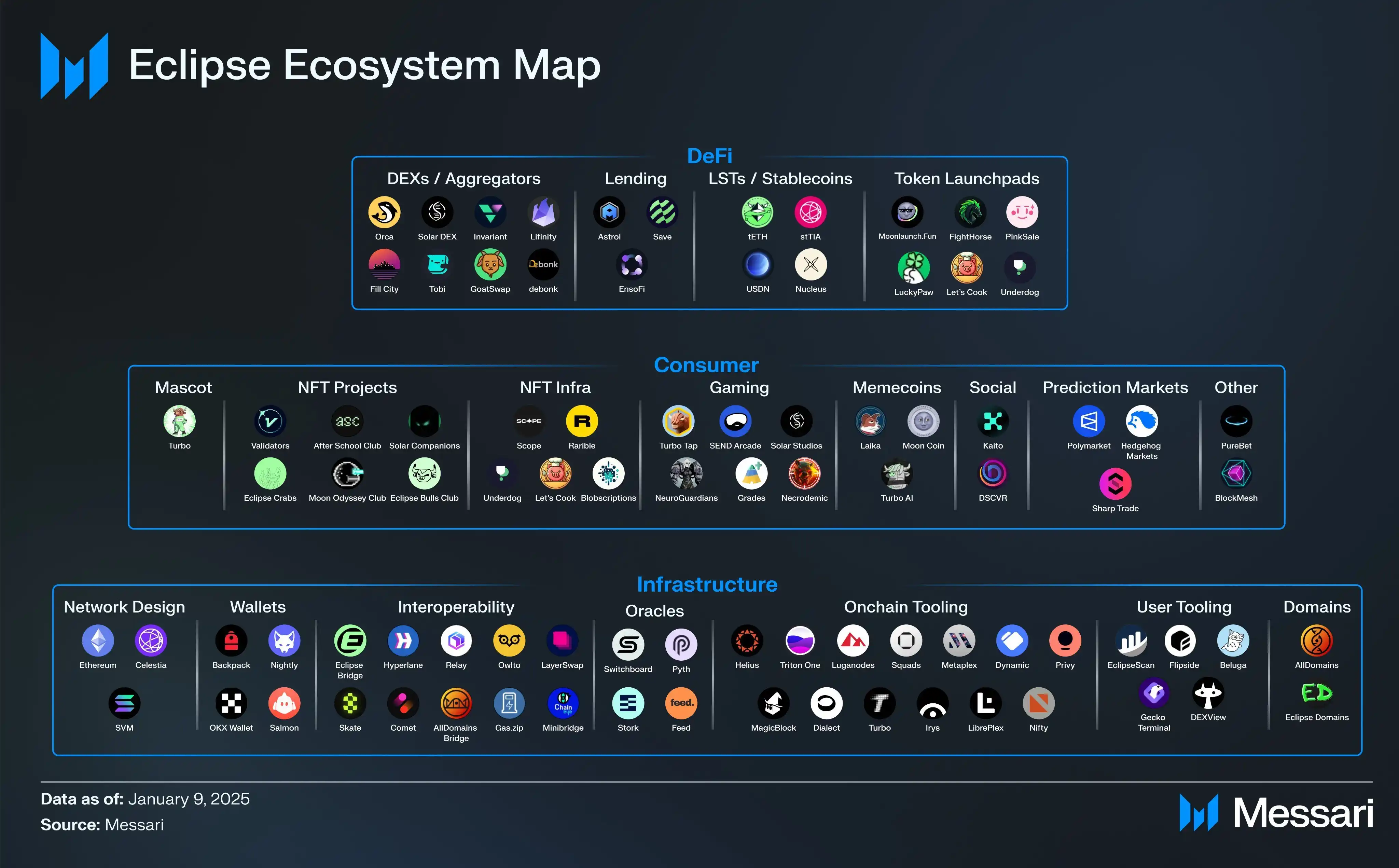
Eclipse Ecosystem Projects
As of now, the Eclipse ecosystem has attracted more than 60 dApps and service providers, covering areas such as DeFi, gaming, and consumer applications. The following BlockBeats will further introduce some of the native projects.
NFT Ecosystem
After School Club
Eclipse's official OG Genesis series "After School Club," with a total of 10,000 pieces, currently has a floor price of 0.49 ETH. It was revealed through an official AMA that there will be a certain airdrop proportion, but the specifics are unknown. The current floor price is already high, so please carefully consider market volatility if you wish to participate.

Scope
Scope is Eclipse's NFT launchpad and secondary market trading platform. It has a significant official background, such as the official NFT ASC issued on this platform. The interactive mode involves trading NFTs and minting NFTs, but there are not many new projects at the moment.

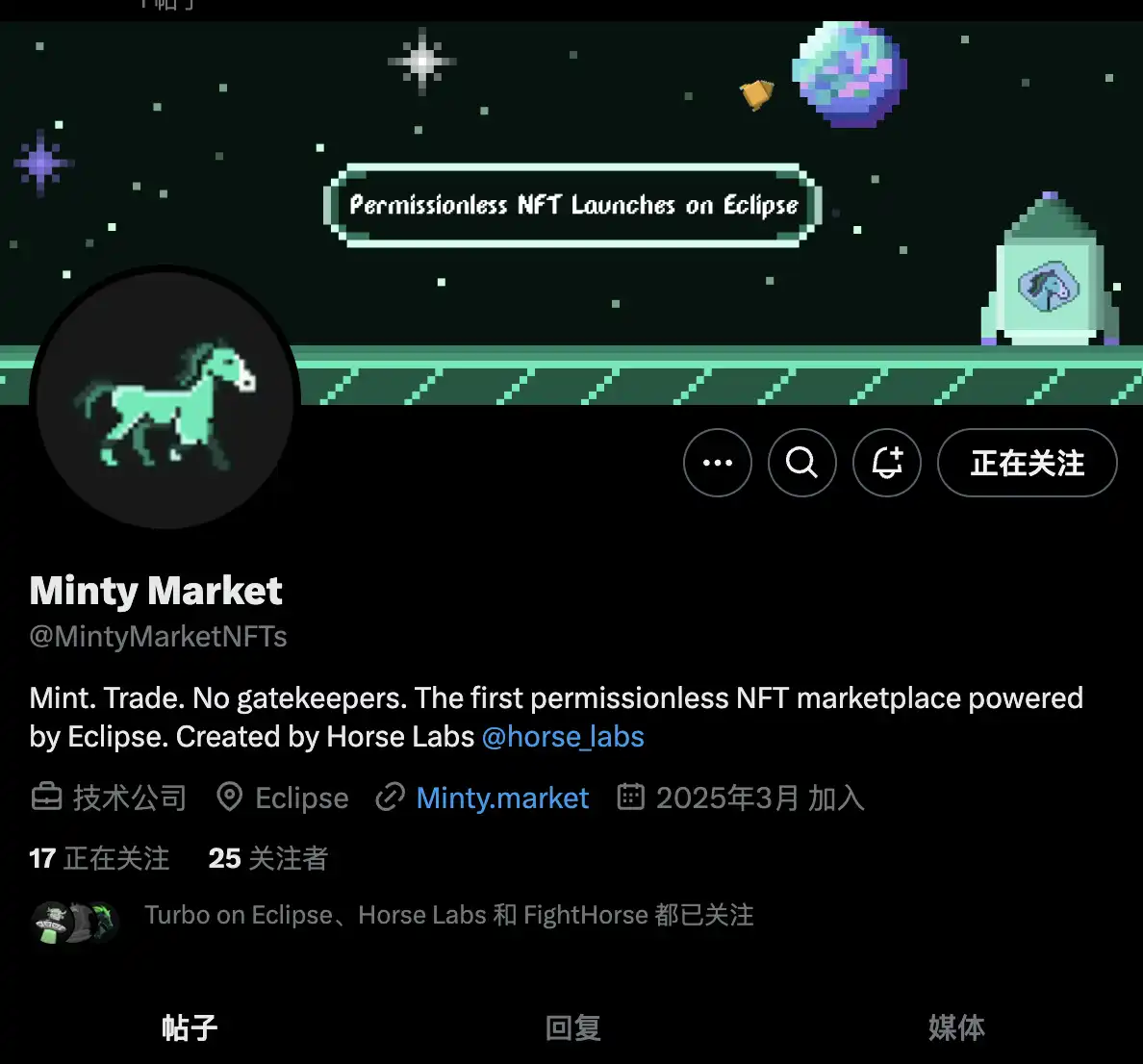
Minty.Market
The HorseLabs-launched permissionless NFT platform just officially launched on March 28, which also created NFT and Meme launch platforms.
GameFi Ecosystem
Send Arcade
SendArcade is an innovative blockchain gaming platform running on the Solana blockchain and Eclipse mainnet, launched by Send. Players familiar with the Solana ecosystem know that Send is a key intermediary for Solana's AI initiatives, responsible for its ecosystem's hackathons and the launch of Solana's On-Chain Kit. Last month, Send Arcade players on Eclipse surpassed 45,000.

Turbo Tap
TurboTap is Eclipse's official cattle-raising game, which involves raising the mascot "Turbo Cow" mentioned above, and is a GameFi that all current Eclipse players must participate in. The gameplay is simple: raise cattle. As long as your wallet or protocol has funds, you can passively earn grass, similar to how holding tokens in Sonic earns PP points. This gamified mechanism converts Eclipse's point system (expected airdrop) into on-chain funds.

Hedgehog
Hedgehog is equivalent to Eclipse's PolyMarket, where users can participate in various prediction markets and earn rewards.

DeFi Ecosystem
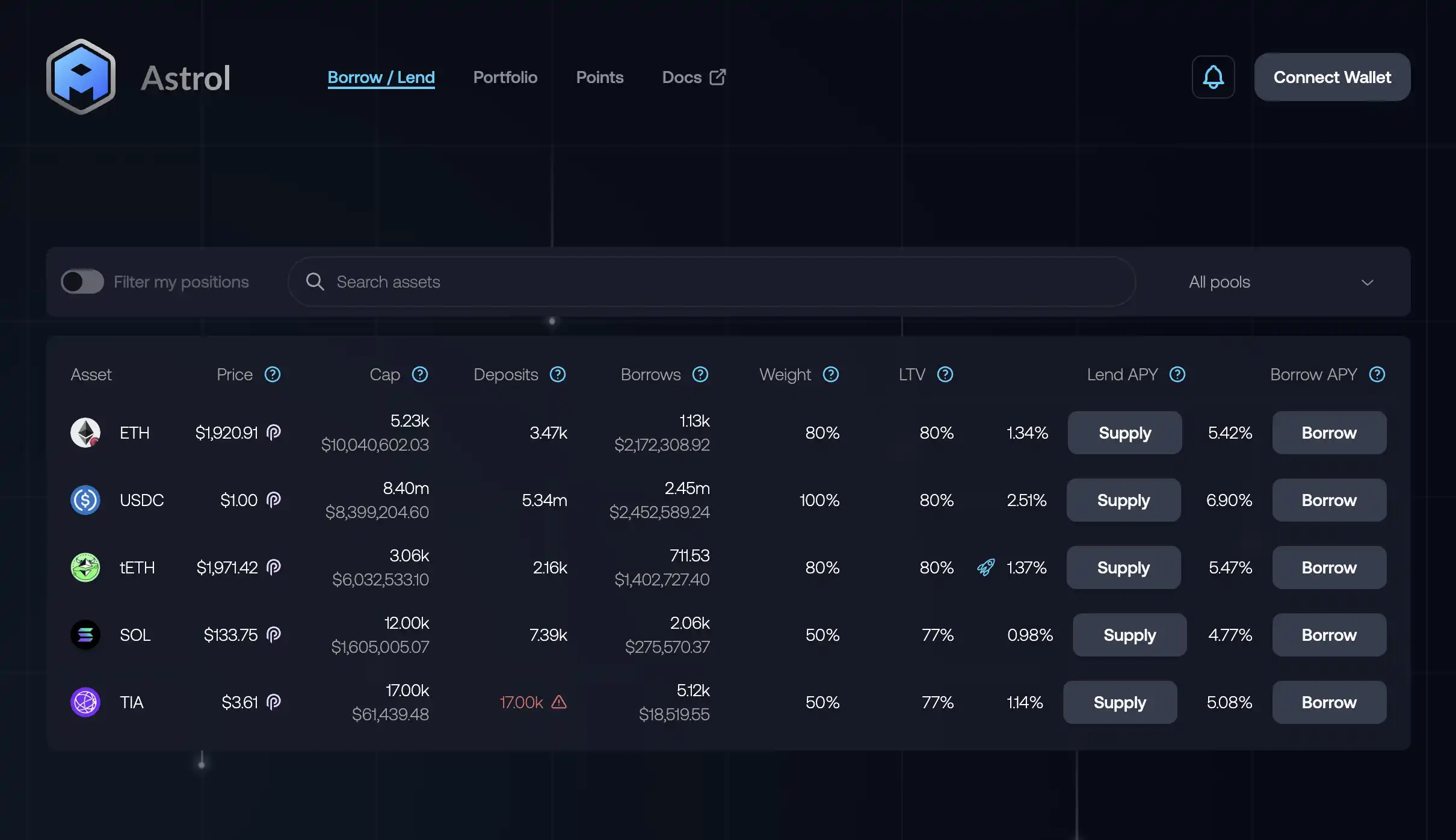
Astrol
Astrol is Eclipse's native lending protocol, currently running a token distribution event. Users who lend on Astrol not only earn lending rewards but also receive future airdrops of new tokens.
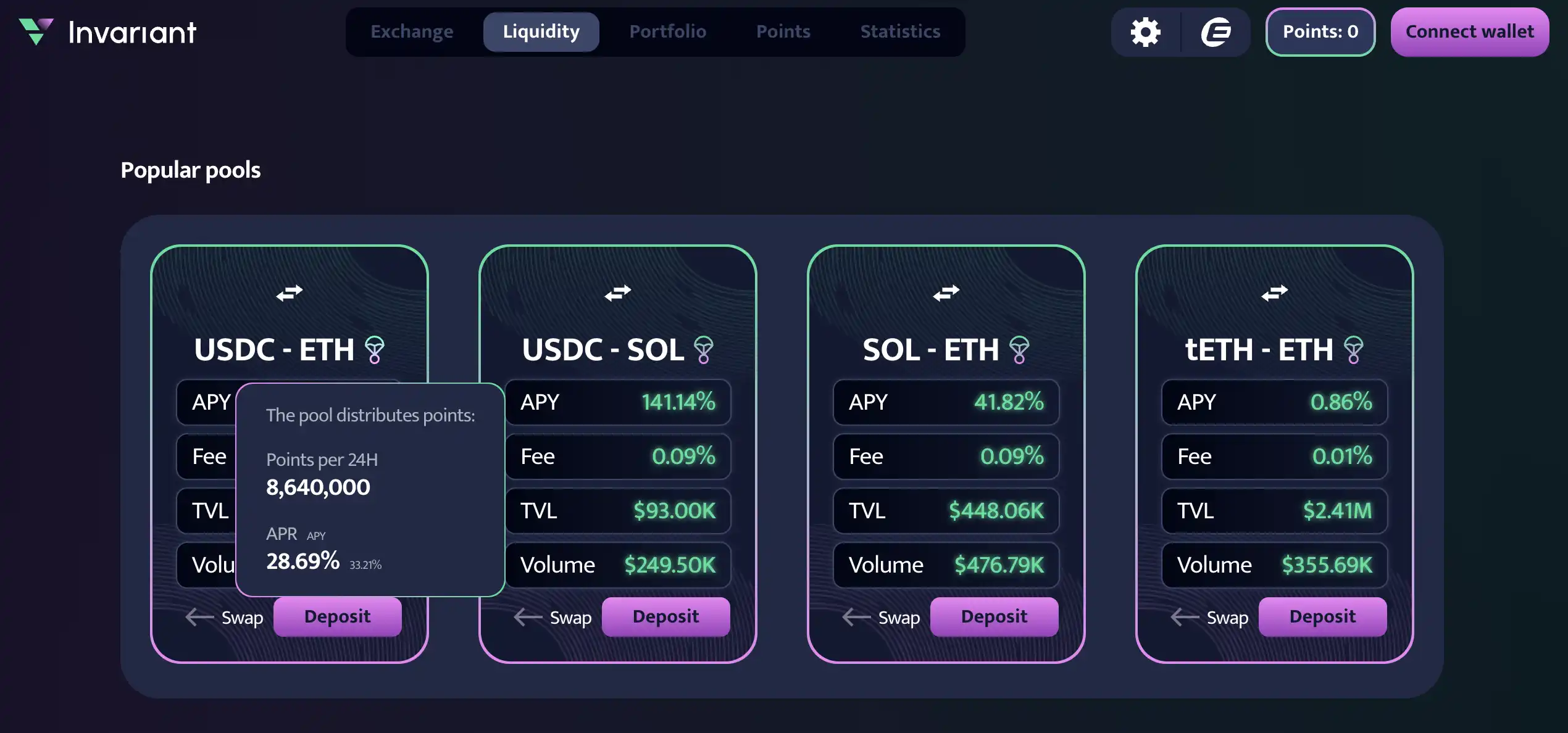
Invariant
Invariant is Eclipse's native DEX protocol. When interacting with it, users participating in several liquidity pools can also expect airdrops of platform tokens.
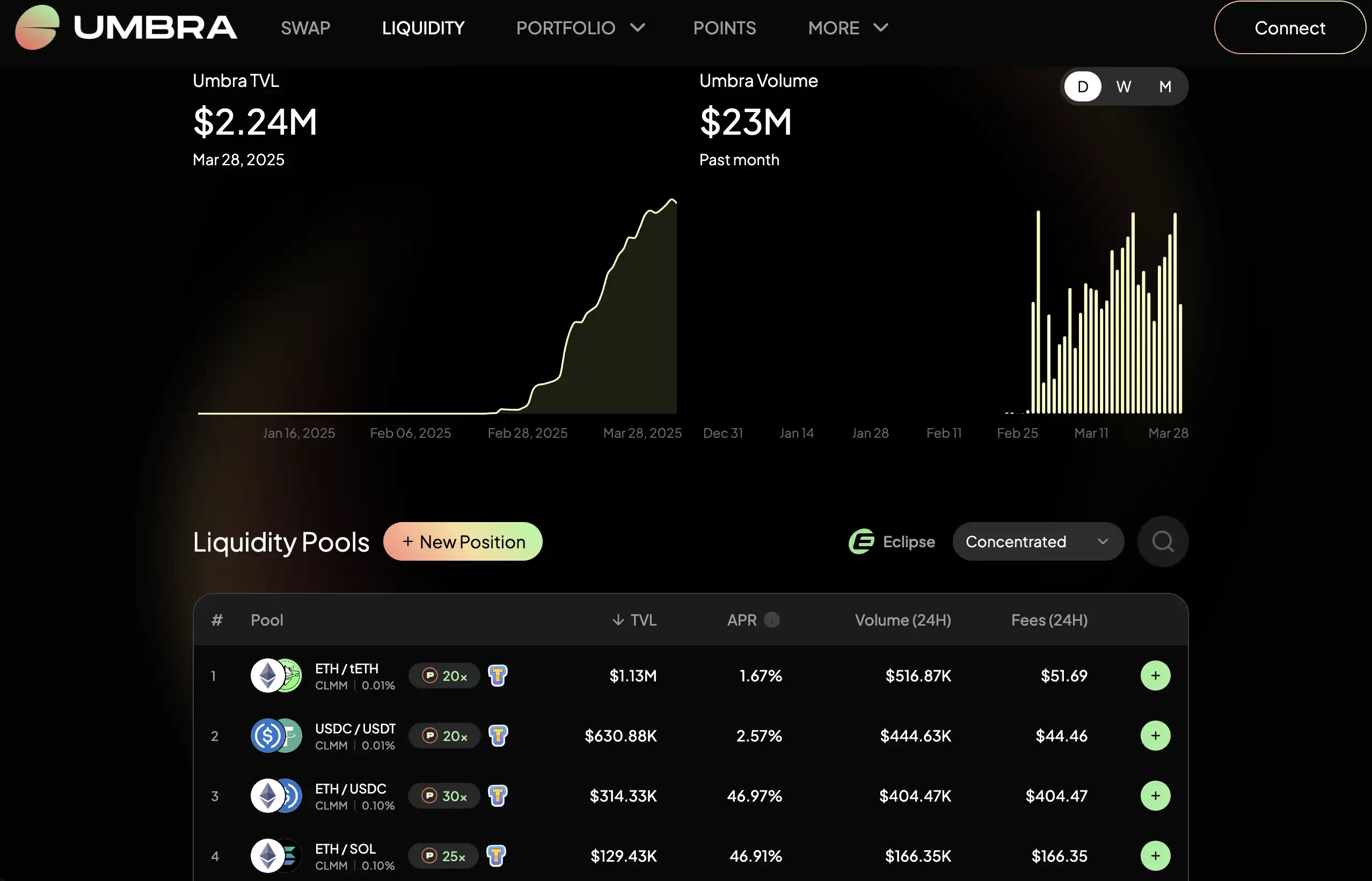
Umbra
Umbra is Eclipse's native DEX deeply integrated into the ecosystem. Recently, it collaborated with Astrol, Nucleus, and the Eclipse team. By providing liquidity to LP pools, users can earn incentives from both platforms, as well as bonus points from the official Turbo Tap cattle-raising game.
Meme Ecosystem
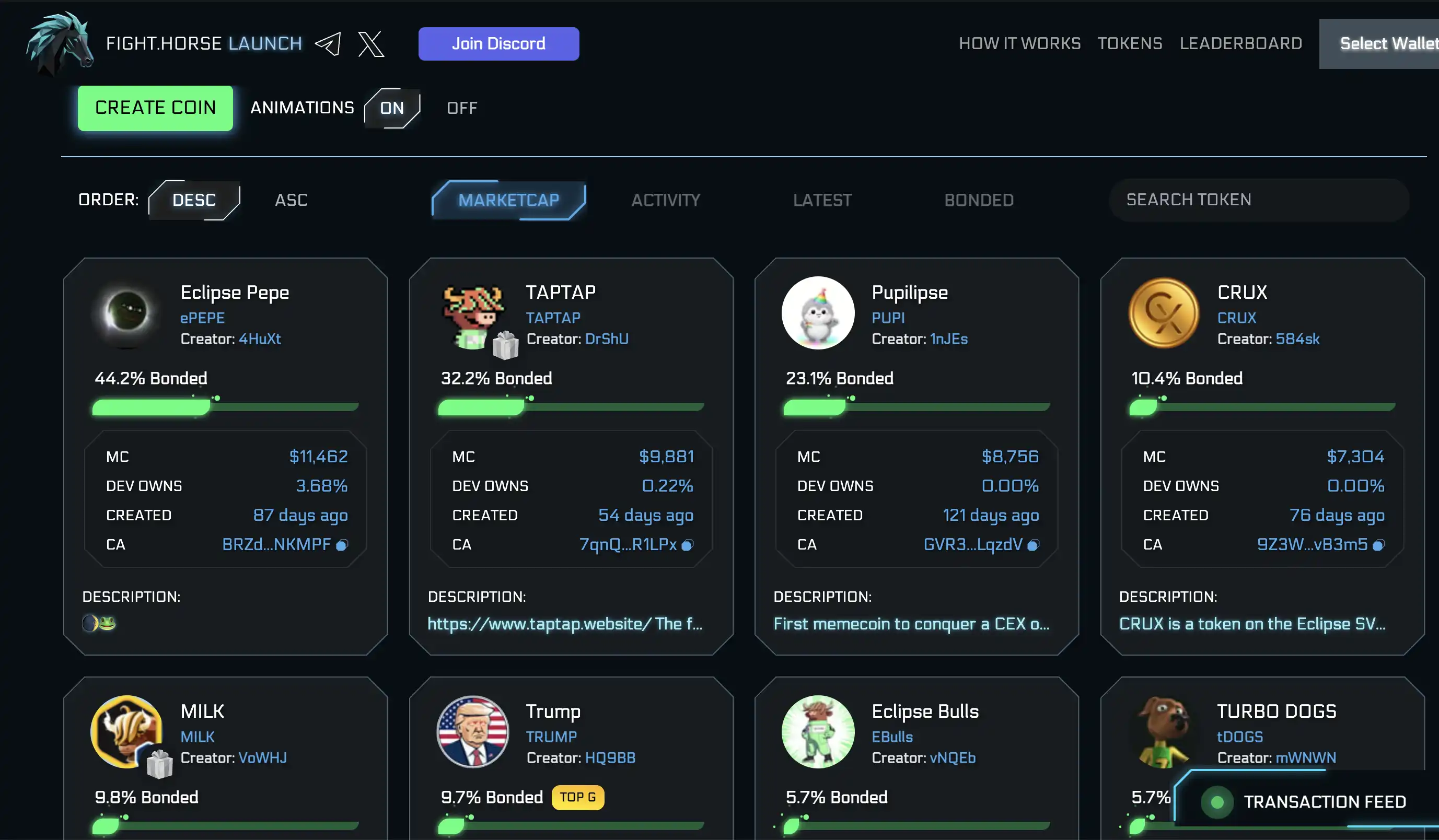
Fight.Horse
Fight.Horse, as SVM's native Meme launcher, is a product of HorseLab and is currently only deployed on Eclipse. Although the MemeCoin culture and infrastructure in the Eclipse ecosystem are not yet widespread, with few basic dashboards and supportive bots, the combination of Solana's ease of use and Ethereum's liquidity concepts is promising. With more ecosystem support, it could become a significant liquidity venue.
Eclipse's "Turbo the Cow" is almost ready to go, with the TGE looming on the horizon. In such a crowded Layer 2 market, will Eclipse, as its narrative goes, be able to simultaneously capture Ethereum's liquidity and high performance to usher in a new era of blockchain applications, or will it, like most L2 solutions, fade into obscurity? Everything is still unknown, but as we move towards greater mainstream adoption, the relentless march of new technologies is necessary, and Eclipse has undoubtedly contributed its fair share.
You may also like

Japan’s Three Megabanks Plan Joint Stablecoin Issuance in Fiscal 2026
MUFG, SMBC, and Mizuho reportedly plan to jointly issue fiat-pegged stablecoins in fiscal 2026, signaling Japan’s growing push into bank-led digital payment infrastructure.

Humanity Discloses H Token Dual-Chain Attack Details, With Losses on Ethereum and BSC Exceeding $36 Million
Humanity said the H token attack across Ethereum and BSC caused more than $36 million in losses after leaked ProxyAdmin keys enabled malicious contract upgrades and token minting.

White House Discusses CLARITY Act With Law Enforcement Ahead of Senate Vote
The White House discussed the CLARITY Act with law enforcement ahead of a Senate vote, focusing on illicit finance risks and developer protections.

$75 billion in foreign capital has fled, and South Korean retail investors have absorbed it all using leverage

Bitcoin Trading Guide 2026: Strategies for Experienced Traders

What Is XAUT and PAXG? Why Tokenized Gold Is Booming in 2026

Cryptocurrency CEXs are flocking to sell US stocks, and traditional brokerages are facing an "uninvited guest."

Will the SpaceX IPO Hurt Bitcoin? Here's What Traders Are Watching
Foreign selling in the South Korean stock market accelerates, with cumulative net sales reportedly reaching $75 billion this year
On June 9, The Kobeissi Letter, citing Goldman Sachs data, reported that global investors are selling South Korean stocks at an unusually rapid pace. In the latest trading session, foreign investors sold about $801 million worth of Kospi constituent stocks again; total foreign outflows last week reached about $10 billion, and the market has been in net foreign selling on nearly every trading day over the past month. According to the data cited in the report, foreign investors have sold about $75 billion worth of South Korean stocks so far this year. Meanwhile, South Korean retail and institutional investors together recorded roughly $69 billion in net buying over the same period, suggesting that the market’s main buying support has come from domestic capital rather than returning overseas funds. The information currently disclosed still mainly comes from The Kobeissi Letter’s retelling and Goldman Sachs data summaries, while public details on the statistical period and the specific definition of “selling” remain relatively limited.

Fortune Warns of Strategy’s Financing Structure Risks as Bitcoin Premium Narrows
Fortune warned that Strategy’s Bitcoin treasury model faces growing financing risks as MSTR’s net asset premium narrows and preferred stock dividend pressure increases.

Ferrari Challenge Le Mans: Carl Moon to Dominate in WEEX Livery

Sahara AI Responds to SAHARA’s Sharp Drop: No Contract or Product Security Issues Found, Internal Investigation Underway
Sahara AI responded to SAHARA’s 60% price drop, saying no token contract or product security issues have been found and an internal investigation is underway.

WEEX Deposit/Withdrawal Dynamic Island: Your Asset Status, Always in Sight
Scaling Crypto Derivatives: The Digital Asset Infrastructure Behind High-Volume Trading
In the fast-moving digital asset ecosystem, derivatives platforms face an extreme architectural test. High-leverage futures markets demand more than just standard security—they require absolute operational precision, zero-latency matching engines, and ironclad structural scalability, all while navigating intense market volatility.
As global platforms scale to meet these demands, the industry is shifting away from rigid, monolithic setups toward a more agile, "decoupled" infrastructure philosophy.
The Blueprint for High-Volume Copy TradingFor elite global exchanges like WEEX (founded in 2018), this architectural choice becomes critical when scaling high-volume retail features like social copy trading. When thousands of users automatically mirror the real-time strategies of elite traders simultaneously, it triggers sudden, monumental spikes in concurrent transactional volume.
To prevent execution latency or settlement bottlenecks during these peak volatility events, a platform's primary engine must remain entirely dedicated to risk management, copy-trade synchronization, and order matching.
The Architectural Rule: New-generation platforms must separate front-end user execution engines from heavy backend infrastructural overhead to eliminate operational friction.
By separating these layers, platforms can maintain complete sovereignty over their trading environments and user experiences while strategically aligning with institutional-grade infrastructure ecosystems. This strategic framework allows modern exchanges to leverage advanced Digital Asset Custody infrastructure such as Cobo’s behind the scenes, ensuring that backend wallet management scales elastically alongside trading spikes.
Capitalizing on Market Momentum and 400× LeverageIn a derivatives arena where platforms offer up to 400× leverage on perpetual contracts, capital efficiency and market agility are core business metrics. To capture market momentum, an exchange needs the ability to rapidly expand its asset offerings, supporting everything from legacy crypto assets to sudden, trending altcoins across a massive library of trading pairs.
Adopting a flexible, scalable Wallet-as-a-Service (WaaS) solution such as Cobo’s could completely rewrite the development timeline for high-growth exchanges. Instead of spending months of engineering capital building out custom backend wallet architectures for every new blockchain network, platforms can deploy localized infrastructure in days.
This agility allows platforms to instantly scale their listings to over a thousand trading pairs without compromising security or delaying time-to-market. It mirrors the exact operational advantages seen during high-velocity market events, similar to how advanced wallet infrastructure empowers platforms during sudden asset surges; allowing exchanges to pass that speed and liquidity directly to their global user base.
A Mature Foundation for GrowthThe synergy between trusted infrastructure ecosystems and global trading platforms represents the natural evolution of a maturing crypto market. As WEEX continues to scale its global spot and derivatives offerings for over 6 million users, adopting robust backend paradigms proves that platforms no longer have to compromise between cutting-edge trading velocity and uncompromised structural security.

Morning Report | BitMine increased its holdings by 126,971 ETH last week; trader Eugene announced his exit from the crypto market

Wang Chuan: How can one not feel anxious after the neighbor Old Wang made thirty times profit by investing in storage stocks? (Seven) - A quarter-century cycle

Get Paid to Onboard? Try WEEX’s New Homepage with Rewards for Registration, Deposit & Trade
WEEX Custom Layout: Build Your Perfect Trading Workspace in Seconds
Japan’s Three Megabanks Plan Joint Stablecoin Issuance in Fiscal 2026
MUFG, SMBC, and Mizuho reportedly plan to jointly issue fiat-pegged stablecoins in fiscal 2026, signaling Japan’s growing push into bank-led digital payment infrastructure.
Humanity Discloses H Token Dual-Chain Attack Details, With Losses on Ethereum and BSC Exceeding $36 Million
Humanity said the H token attack across Ethereum and BSC caused more than $36 million in losses after leaked ProxyAdmin keys enabled malicious contract upgrades and token minting.
White House Discusses CLARITY Act With Law Enforcement Ahead of Senate Vote
The White House discussed the CLARITY Act with law enforcement ahead of a Senate vote, focusing on illicit finance risks and developer protections.
$75 billion in foreign capital has fled, and South Korean retail investors have absorbed it all using leverage
Bitcoin Trading Guide 2026: Strategies for Experienced Traders
What Is XAUT and PAXG? Why Tokenized Gold Is Booming in 2026


