
The Wisdom of Becoming a Money-Making KOL as Told by a 110K-Follower Influencer

Original Article Title: "Today's Morning Read -- Insights on Becoming a Money-Making KOL"
Original Article Author: Brother Leon from Down Under
Lately, the discussions on how to become a Key Opinion Leader (KOL) and how to land major deals have resurged. Along with this, the question of "Are there no noblemen in today's world?" arises. Many people quickly amass tens of thousands of followers, jump on a trend, and then proclaim themselves as KOLs ready to take on deals.
From my observations, I've noticed that many people haven't grasped some key points. Today, let's share some insights. If you aspire to become a true KOL in the crypto world, capable of landing sizable deals, then I suggest you pay close attention.

This full-content piece contains 2100 words and will take about 7 minutes to read. If you find it helpful, please consider saving, liking, and sharing it. This will motivate me to write the next piece in this series.
Lately, many people have asked me, "How can I make money as a KOL?"
What I want to say is: Genuine KOLs who earn big money are never those who initially set out to make money this way.
They simply have something to say, something to express, and then, unintentionally, they make money.
On the other hand, those who are focused on money from the start end up with nothing.
The abbreviation KOL stands for Key Opinion Leader, typically translated into Chinese as Key Opinion Leader.
So, although some now jokingly refer to crypto KOLs as being as common as dogs and the internet is full of pseudo-celebrities, in my opinion, strictly defined, many people are more suitable to be called "internet celebrities" rather than KOLs.
A KOL is not a joke re-poster, not a drama-stirring machine, not a provider of hot pics for fans; a KOL is someone who can consistently offer independent insights in a certain community and resonate with others.
Here's an example: @myhongkongdoll, a doll sister, falls into my categorization as a KOL. Although she is famous for distributing benefits to outsiders in the community, many of the opinions she shares on Twitter are ones I agree with and am influenced by.
Genuine money-making KOLs start with having "someone who listens to what you say and can take it in," and then move on to having "someone who pays for what you offer."
Influencer or KOL
Many people have a misconception, thinking that as long as they become popular, they will automatically become a major Key Opinion Leader (KOL) and should be able to land big brand deals. Therefore, in the recent past, there have been countless dramas, controversies, scandals, boundary-pushing behavior, public stunts, and chaotic situations on social media, with the belief that as long as a post generates traffic, they have succeeded.
In reality, I believe they have somewhat confused the Web2 "influencer economy" with the Web3 KOL economy. Does having a highly engaged post always guarantee receiving substantial brand deals? Not necessarily. While brand deals will surely come, legitimate projects that can make money may not always reach out.
The foundation of the Web2 influencer economy is that even an average person who becomes popular due to some random factor can effortlessly engage in live streaming and product endorsements. Since fans are always going to buy something, the prices across various channels are quite similar, making it interchangeable where they make their purchases.
The worst-case scenario for influencer product endorsements is promoting products with no quality, overpriced items, or unethical aspects. After all, physical goods are protected by national laws and regulations, so how much can you manipulate that?
However, Web3 is a different story. Over 95% of brand deals in this space are intended to scam, including rug pulls and malicious links. If you promote such products, your loyal followers may end up losing money, or even worse, losing everything.
I previously exposed a so-called "KOL" promoting a rug pull project, which rug pulled within a day, causing my community members to lose tens of thousands of dollars. When asked to compensate, he pitifully claimed to have only a few thousand dollars in his wallet and even sent me a screenshot, which was quite amusing.
In summary, if you are solely focused on accepting brand deals to create content, your output is prone to losing its essence. Over time, your content may become more generic, pandering, and ambiguous. Eventually, you will turn into an account with no stance, no uniqueness, and no pricing power.
So What's the Right Approach? Deep Dive
You should first ask yourself: In which field do I know slightly more than others? Just being slightly more knowledgeable than 95% of the people is adequate. Then, within this field, consistently voice out your opinions.
When your influence affects someone's decision-making, drives a narrative, or initiates a mini-trend, then you have already become a KOL.
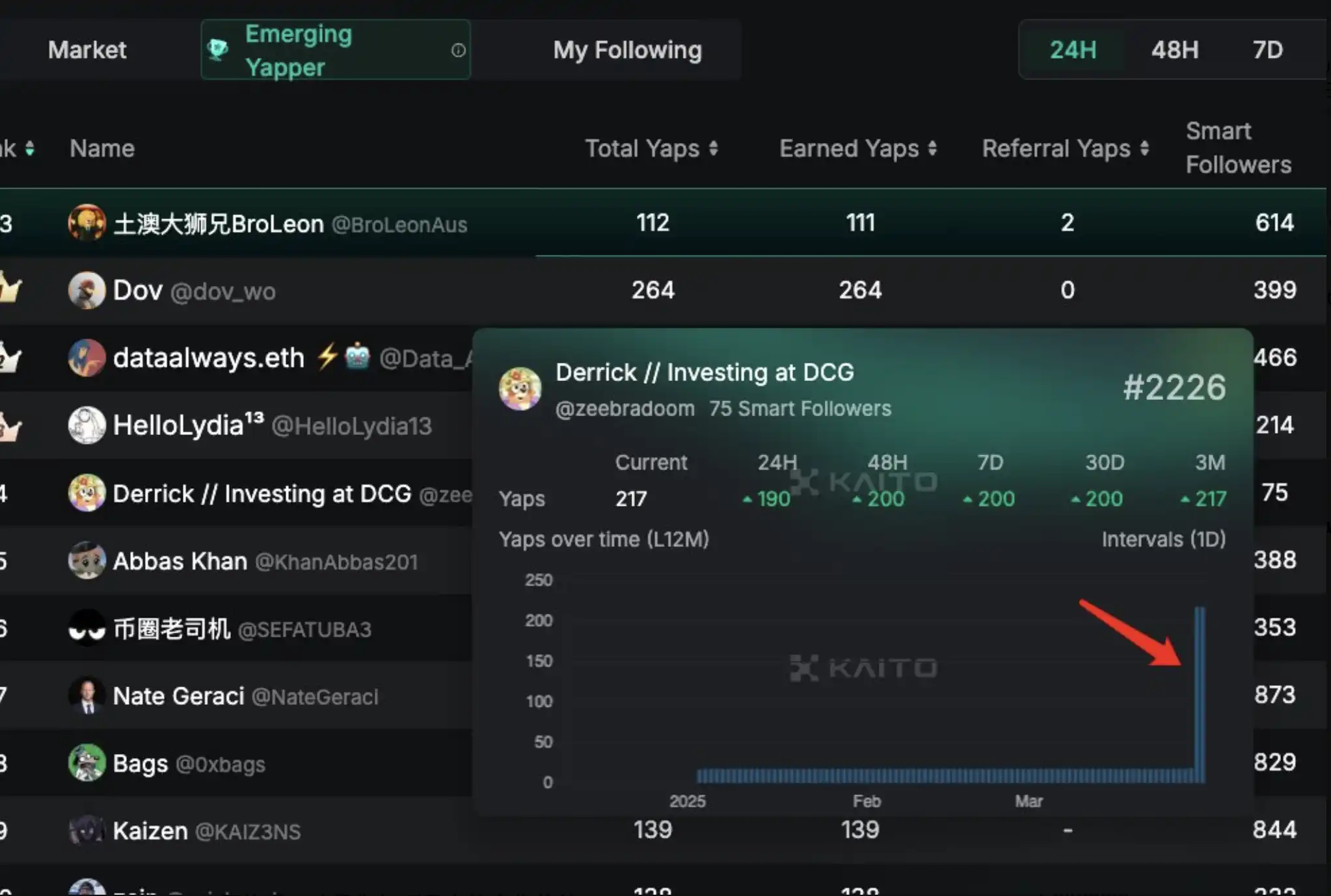
This is also why I have always appreciated @KaitoAI, as some small bloggers are genuinely discovered by emerging platforms and receive more exposure and recognition.
By filtering out the noise and helping many individuals discover valuable content from KOLs, platforms like this assist in highlighting the hidden gems. For instance, when a post with hardly any interactions suddenly skyrockets in engagement one day, it unquestionably contains valuable insights worth exploring.
Furthermore, the Value of Your Cooperation with the Project Team
A truly valuable KOL is someone who can help the project team achieve strategic goals at a certain stage.
For example, for some time, project teams have needed to boost engagement and do data-driven work to secure a slot on a top-tier CEX or to further fundraising. In such cases, you should be able to help them ignite attention and attract the spotlight of wool-pulling studios.
If what the project team needs is a post-listing price surge, then you should be able to maintain confidence, guide the narrative, and stimulate market buying interest.
KOL and the project team are fundamentally in a "symbiotic relationship of stages."
You need to understand what the project needs most at the moment and then ask yourself if you can truly deliver on that. If you can't, then don't take it. If you can, then you deserve the payment. Otherwise, most likely, you will be in a situation where you can't stomach it and ultimately damage your personal credibility.
Personal Brand Cultivation
There is something more crucial: is your personal brand clear? Is it trustworthy?
When others think of you, what comes to mind? Are you a deep researcher? An independent thinker? A comedian? A master of cryptocurrency biographies? An Alpha Hunter? Or are you full of copy-paste ad copies?
Your worth is determined by how trusted you are in others' minds, how many people trust you.
Proactively Choose Projects for Mutual Benefits
I have seen too many people whose timelines are filled with indiscriminate advertising posts without filtering or adjusting their messaging, and in the end, they don't even know who they are anymore. You are not an advertising platform; you are an information filter. You should choose projects, not let projects choose you.
I also receive many collaboration invitations every day. However, I turn down most of them. If a project cannot convince me to invest my own money, time, and confidence, I dare not advocate for it.
I cannot guarantee that every recommendation will be profitable, but I can guarantee - I have also invested. If it loses, my followers and I lose together; if it wins, we win together. This is my minimum commitment to mutual success.
I always believe that a good collaboration can allow me to:
• Receive fair compensation
• Enable the project team to achieve market exposure
• Provide my readers with real information and participation opportunities
This is the true win-win-win situation, and it is the sole meaning of why I do this. If we can't achieve a win-win-win, then it's better not to do it at all. Don't sacrifice your trust or damage your reputation for a small gain. Genuine personal influence is built through a series of choices, not by seeking exposure.
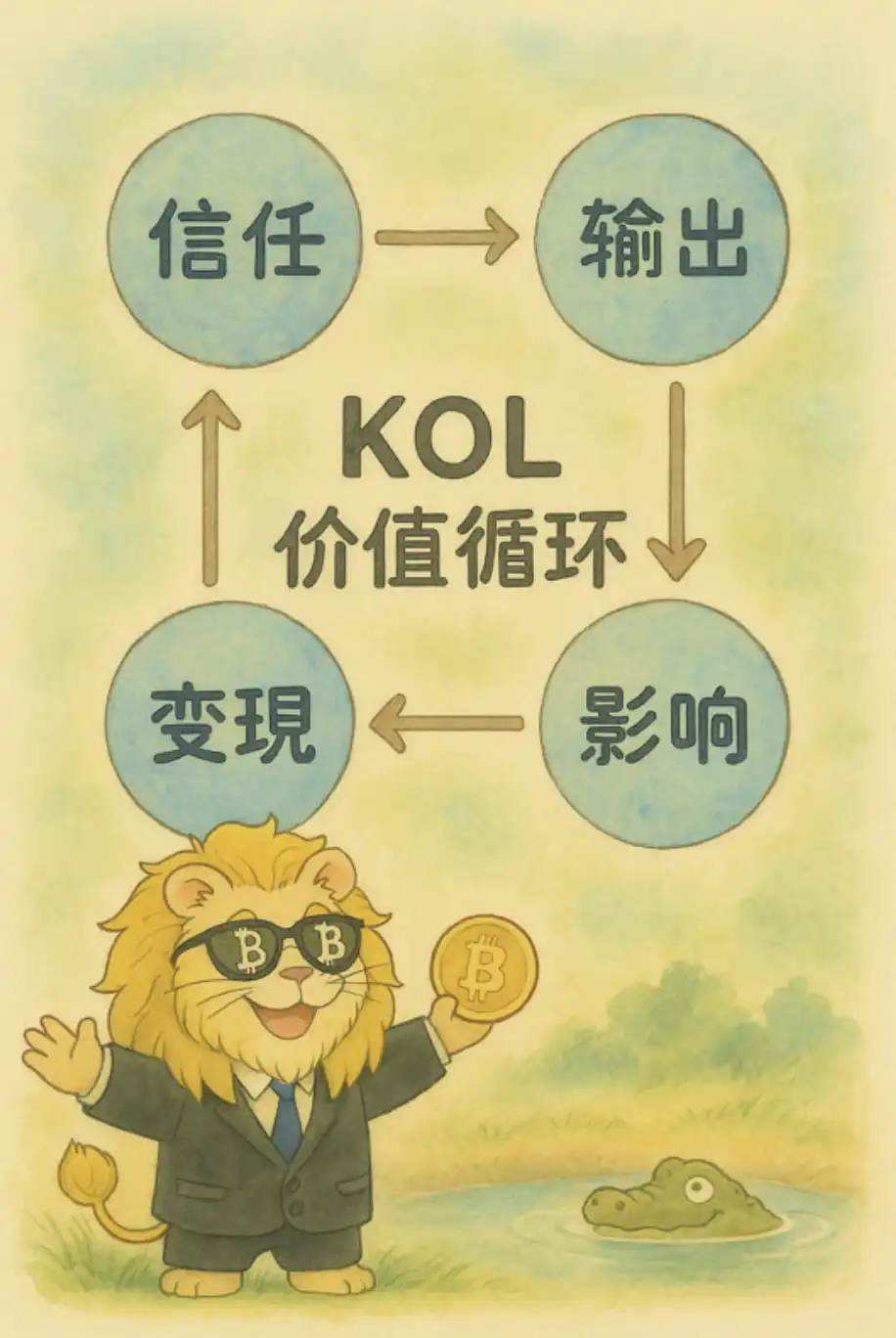
In conclusion:
Influence is compound interest; trust is the moat.
The amount of money you ultimately earn does not depend on how many ads you post, but on how likely your ads are to help others make money and how many people are willing to trust you.
Trust's compound interest is what a KOL should embody.
This article is a contribution and does not represent the views of BlockBeats.
You may also like

Japan’s Three Megabanks Plan Joint Stablecoin Issuance in Fiscal 2026
MUFG, SMBC, and Mizuho reportedly plan to jointly issue fiat-pegged stablecoins in fiscal 2026, signaling Japan’s growing push into bank-led digital payment infrastructure.

Humanity Discloses H Token Dual-Chain Attack Details, With Losses on Ethereum and BSC Exceeding $36 Million
Humanity said the H token attack across Ethereum and BSC caused more than $36 million in losses after leaked ProxyAdmin keys enabled malicious contract upgrades and token minting.

White House Discusses CLARITY Act With Law Enforcement Ahead of Senate Vote
The White House discussed the CLARITY Act with law enforcement ahead of a Senate vote, focusing on illicit finance risks and developer protections.

$75 billion in foreign capital has fled, and South Korean retail investors have absorbed it all using leverage

Bitcoin Trading Guide 2026: Strategies for Experienced Traders

What Is XAUT and PAXG? Why Tokenized Gold Is Booming in 2026

Cryptocurrency CEXs are flocking to sell US stocks, and traditional brokerages are facing an "uninvited guest."

Will the SpaceX IPO Hurt Bitcoin? Here's What Traders Are Watching
Foreign selling in the South Korean stock market accelerates, with cumulative net sales reportedly reaching $75 billion this year
On June 9, The Kobeissi Letter, citing Goldman Sachs data, reported that global investors are selling South Korean stocks at an unusually rapid pace. In the latest trading session, foreign investors sold about $801 million worth of Kospi constituent stocks again; total foreign outflows last week reached about $10 billion, and the market has been in net foreign selling on nearly every trading day over the past month. According to the data cited in the report, foreign investors have sold about $75 billion worth of South Korean stocks so far this year. Meanwhile, South Korean retail and institutional investors together recorded roughly $69 billion in net buying over the same period, suggesting that the market’s main buying support has come from domestic capital rather than returning overseas funds. The information currently disclosed still mainly comes from The Kobeissi Letter’s retelling and Goldman Sachs data summaries, while public details on the statistical period and the specific definition of “selling” remain relatively limited.

Fortune Warns of Strategy’s Financing Structure Risks as Bitcoin Premium Narrows
Fortune warned that Strategy’s Bitcoin treasury model faces growing financing risks as MSTR’s net asset premium narrows and preferred stock dividend pressure increases.

Ferrari Challenge Le Mans: Carl Moon to Dominate in WEEX Livery

Sahara AI Responds to SAHARA’s Sharp Drop: No Contract or Product Security Issues Found, Internal Investigation Underway
Sahara AI responded to SAHARA’s 60% price drop, saying no token contract or product security issues have been found and an internal investigation is underway.

WEEX Deposit/Withdrawal Dynamic Island: Your Asset Status, Always in Sight
Scaling Crypto Derivatives: The Digital Asset Infrastructure Behind High-Volume Trading
In the fast-moving digital asset ecosystem, derivatives platforms face an extreme architectural test. High-leverage futures markets demand more than just standard security—they require absolute operational precision, zero-latency matching engines, and ironclad structural scalability, all while navigating intense market volatility.
As global platforms scale to meet these demands, the industry is shifting away from rigid, monolithic setups toward a more agile, "decoupled" infrastructure philosophy.
The Blueprint for High-Volume Copy TradingFor elite global exchanges like WEEX (founded in 2018), this architectural choice becomes critical when scaling high-volume retail features like social copy trading. When thousands of users automatically mirror the real-time strategies of elite traders simultaneously, it triggers sudden, monumental spikes in concurrent transactional volume.
To prevent execution latency or settlement bottlenecks during these peak volatility events, a platform's primary engine must remain entirely dedicated to risk management, copy-trade synchronization, and order matching.
The Architectural Rule: New-generation platforms must separate front-end user execution engines from heavy backend infrastructural overhead to eliminate operational friction.
By separating these layers, platforms can maintain complete sovereignty over their trading environments and user experiences while strategically aligning with institutional-grade infrastructure ecosystems. This strategic framework allows modern exchanges to leverage advanced Digital Asset Custody infrastructure such as Cobo’s behind the scenes, ensuring that backend wallet management scales elastically alongside trading spikes.
Capitalizing on Market Momentum and 400× LeverageIn a derivatives arena where platforms offer up to 400× leverage on perpetual contracts, capital efficiency and market agility are core business metrics. To capture market momentum, an exchange needs the ability to rapidly expand its asset offerings, supporting everything from legacy crypto assets to sudden, trending altcoins across a massive library of trading pairs.
Adopting a flexible, scalable Wallet-as-a-Service (WaaS) solution such as Cobo’s could completely rewrite the development timeline for high-growth exchanges. Instead of spending months of engineering capital building out custom backend wallet architectures for every new blockchain network, platforms can deploy localized infrastructure in days.
This agility allows platforms to instantly scale their listings to over a thousand trading pairs without compromising security or delaying time-to-market. It mirrors the exact operational advantages seen during high-velocity market events, similar to how advanced wallet infrastructure empowers platforms during sudden asset surges; allowing exchanges to pass that speed and liquidity directly to their global user base.
A Mature Foundation for GrowthThe synergy between trusted infrastructure ecosystems and global trading platforms represents the natural evolution of a maturing crypto market. As WEEX continues to scale its global spot and derivatives offerings for over 6 million users, adopting robust backend paradigms proves that platforms no longer have to compromise between cutting-edge trading velocity and uncompromised structural security.

Morning Report | BitMine increased its holdings by 126,971 ETH last week; trader Eugene announced his exit from the crypto market

Wang Chuan: How can one not feel anxious after the neighbor Old Wang made thirty times profit by investing in storage stocks? (Seven) - A quarter-century cycle

Get Paid to Onboard? Try WEEX’s New Homepage with Rewards for Registration, Deposit & Trade
WEEX Custom Layout: Build Your Perfect Trading Workspace in Seconds
Japan’s Three Megabanks Plan Joint Stablecoin Issuance in Fiscal 2026
MUFG, SMBC, and Mizuho reportedly plan to jointly issue fiat-pegged stablecoins in fiscal 2026, signaling Japan’s growing push into bank-led digital payment infrastructure.
Humanity Discloses H Token Dual-Chain Attack Details, With Losses on Ethereum and BSC Exceeding $36 Million
Humanity said the H token attack across Ethereum and BSC caused more than $36 million in losses after leaked ProxyAdmin keys enabled malicious contract upgrades and token minting.
White House Discusses CLARITY Act With Law Enforcement Ahead of Senate Vote
The White House discussed the CLARITY Act with law enforcement ahead of a Senate vote, focusing on illicit finance risks and developer protections.
$75 billion in foreign capital has fled, and South Korean retail investors have absorbed it all using leverage
Bitcoin Trading Guide 2026: Strategies for Experienced Traders
What Is XAUT and PAXG? Why Tokenized Gold Is Booming in 2026


