
Trump Family Enters the Stablecoin Race? A Deep Dive into the Binance Smart Chain's "USD1 President Stablecoin"




The ever-evolving BSC ecosystem witnessed another surge in popularity early this morning. The DeFi project World Liberty Financial (WLFI), supported by the Trump family, launched the USD-pegged stablecoin USD1 on BSC. After CZ shared this news, a community-created token with the same name instantly entered a "gold rush mode."
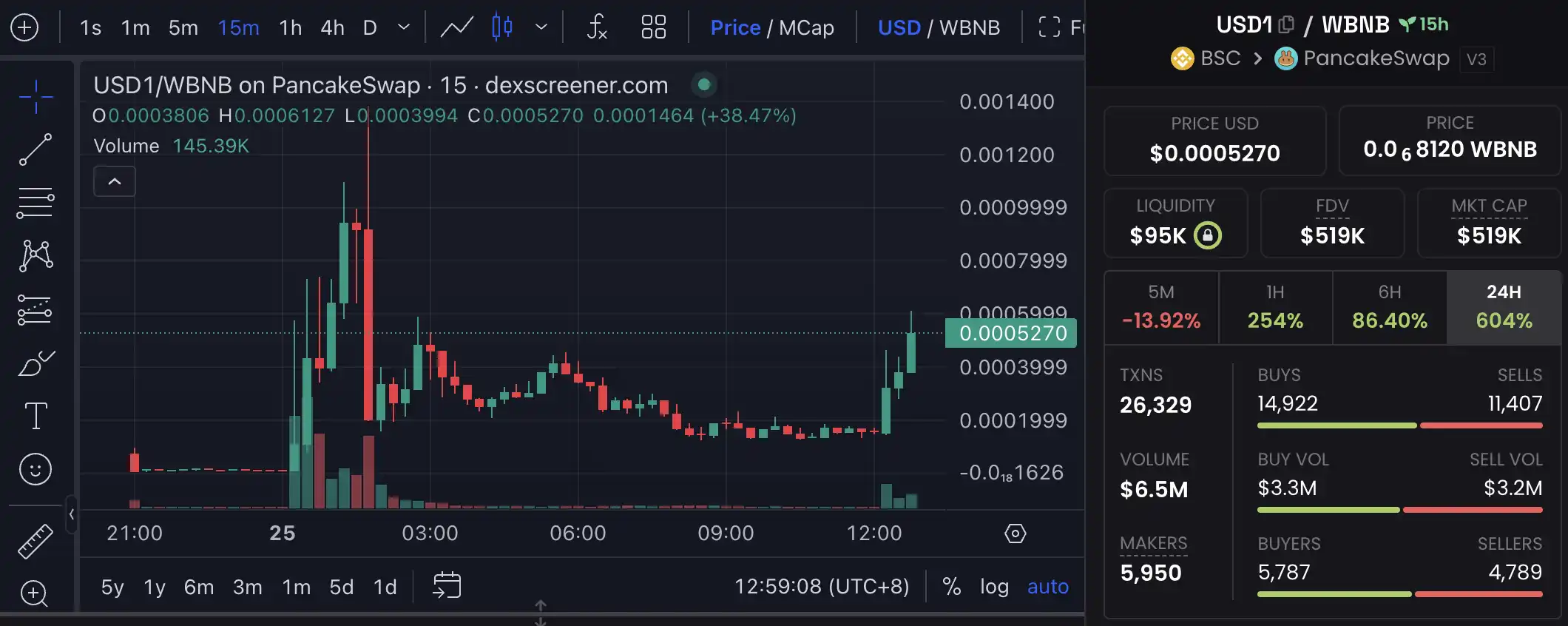
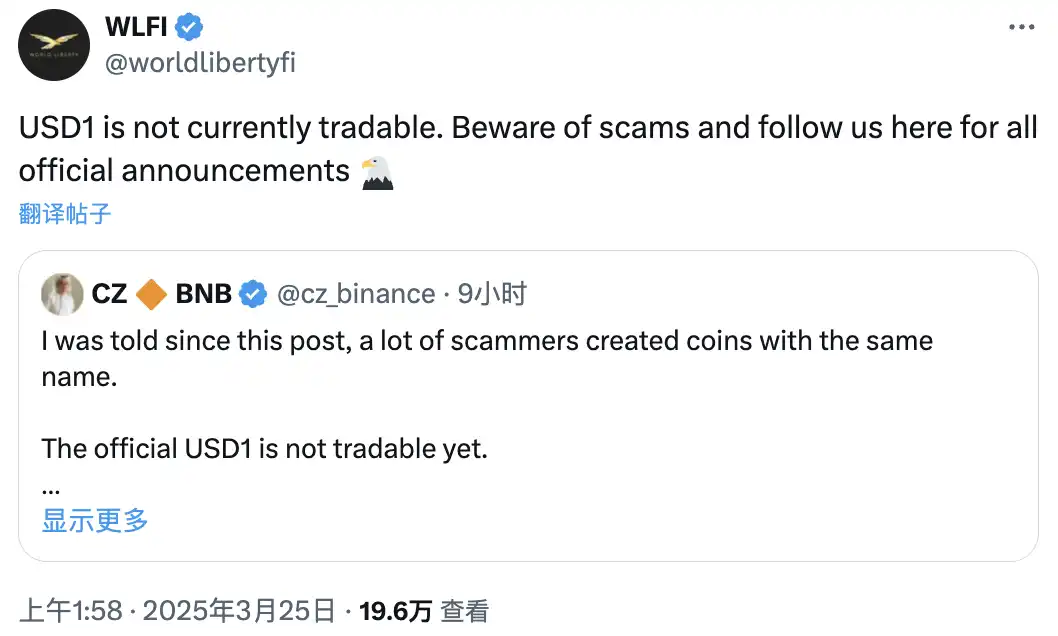
Due to numerous scam tokens with the same name, both CZ and the WLFI official accounts posted warnings to users to beware of scams. Subsequently, the price of USD1 quickly retraced, dropping over 50% from its peak at the time of writing.
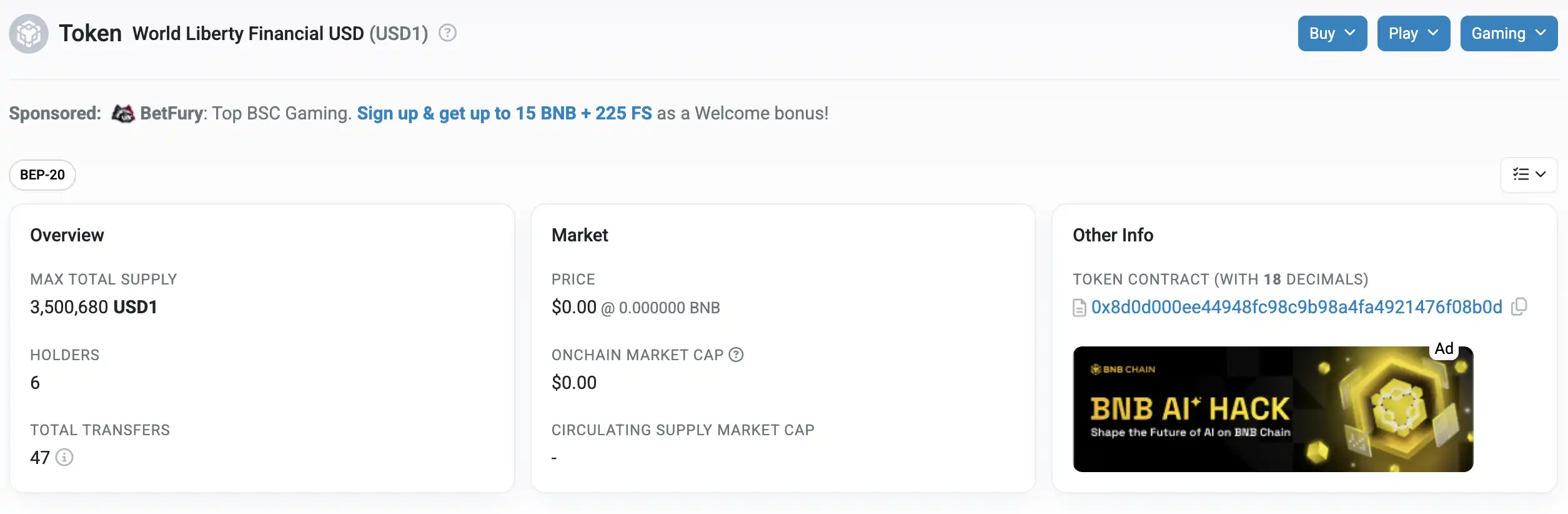
The total supply of USD1 exceeds $3.5 million. According to on-chain data from Etherscan and BscScan, this project issued the World Liberty Financial USD (USD1) token in early March. CZ confirmed that the stablecoin contract has been deployed on the BNB chain and Ethereum, currently open for testing to a limited number of addresses.
Why Did WLFI Target a Stablecoin?
The reason WLFI targeted a stablecoin may lie in its developmental trajectory. Since initiating its first token sale in October last year, WLFI has aimed to become the "decentralized finance benchmark," promoting to investors in the US and globally. With Trump himself serving as the "Chief Crypto Advocate" and his three sons as "Ambassadors" and "DeFi Visionaries," the family's aura has been their biggest selling point. However, difficulties in the initial fundraising round and the market perception as a "meme project" led to significant doubts.
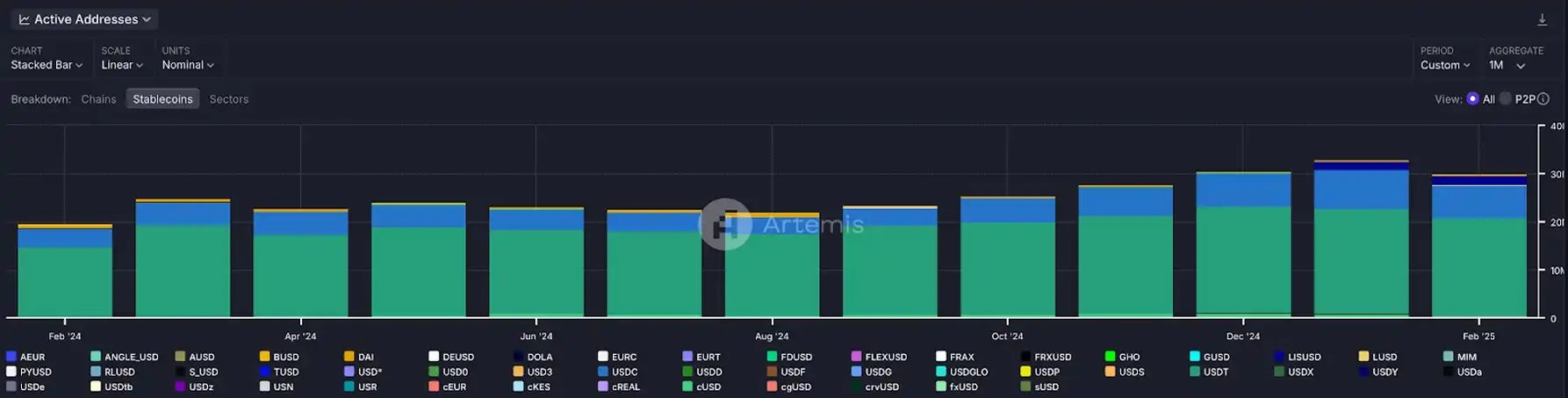
A stablecoin project thriving in a bear market can not only provide WLFI with trading, lending, and liquidity services but also generate substantial long-term returns. Following the launch of USD1, it might attract a significant amount of institutional and retail funds, potentially helping WLFI shed its "meme project" label and transform into a genuine DeFi player. According to WLFIArtemis and Dune platform data, the active stablecoin wallet count grew by over 50% between February 2024 and February 2025. In March of this year, the total stablecoin market value surpassed $230 billion, with USDT and USDC still dominant. WLFI's entry at this time might leverage favorable policies to compete for market share.
Since Trump's election, he has publicly supported cryptocurrency development multiple times, promising to make the US the "global crypto center" and emphasizing the US Dollar's dominant position in the digital economy. Given that stablecoins serve as a vital vehicle for digitizing the Dollar, they have naturally become a policy focal point.
Related Reading: "Why Did $900 Billion Evaporate from the Crypto Market While Stablecoin Market Cap Hit an All-Time High?"
The launch of USD1 comes at a critical time as the U.S. Congress is deliberating on the "Guidance and Effective Supervision of Stablecoin Innovation Act” (GENIUS Act). The bill was approved by the Senate Banking Committee on March 13 with 18 votes in favor and 6 against, poised to proceed to a full Senate vote. This marks a significant step towards the bill becoming law, signaling the first approval of stablecoin regulation at the Senate committee level.
Bo Hines, Executive Director of the Presidential Advisory Council on Digital Assets, expects the bill to be submitted for Trump's signature before June. Kristin Smith, CEO of the Blockchain Association, suggests that the U.S. Congress may pass stablecoin-related legislation by August 2025, with the GENIUS Act seen as a key driving force. If WLFI can refine USD1 early, it not only has the potential to quickly comply with the law after its enactment but may also seek a regulatory “green channel” leveraging Trump's influence.
Following the Trend or Seizing the Opportunity?
Since Trump returned to the White House as the "Crypto President," his and the WLFI family's actions have gradually become a barometer of the crypto market. Following CZ's return to the BSC ecosystem, the heat has surged, trading volumes have picked up, and various "power couple shill" meme coins have made the market exceptionally lively. Meanwhile, stablecoins continue to attract attention with their positioning as a "bear market haven." The launch of USD1 by WLFI this time can be said to have gathered the three major "BUFFs" of Trump's traffic, BSC ecosystem, and stablecoin concept, naturally generating high interest.
Although the timing is auspicious, in fact, WLFI's layout for stablecoins was not a spur-of-the-moment decision but rather a well-thought-out plan. Back on October 14 last year, Rich Teo, former CEO of Paxos, joined WLFI as the head of stablecoin and payment business, with this personnel change already sparking speculation in the market about its foray into stablecoin projects.
Then on October 29, Decrypt reported, citing sources, that WLFI planned to develop its own stablecoin. At that time, the project had already raised $14 million through an initial token sale, but the product still needed time to enhance security.
On March 13 this year, Bloomberg revealed that WLFI had held secret discussions with Binance, with four sources disclosing discussions on the possibility of collaborating to develop a U.S. dollar-pegged stablecoin. Although negotiation details were not made public, this clue aligns well with the current launch of USD1 on BSC.
While it is currently not possible to trade USD1, the market is full of speculation as to whether this is another question mark over Trump's new "harvesting" strategy. After all, this year's crypto market has been spun around by this president's tariff threats, meme pumping, and post-liquidation shilling. Just the day before yesterday, he was still passionately shouting "I LOVE $TRUMP—SO COOL!!! The Greatest of them all!!!!!!!!!!!!!!!!" for his $TRUMP, but obviously the market is no longer buying it. This time, the shilling only caused $TRUMP to briefly rise by about 12% before quickly falling back.
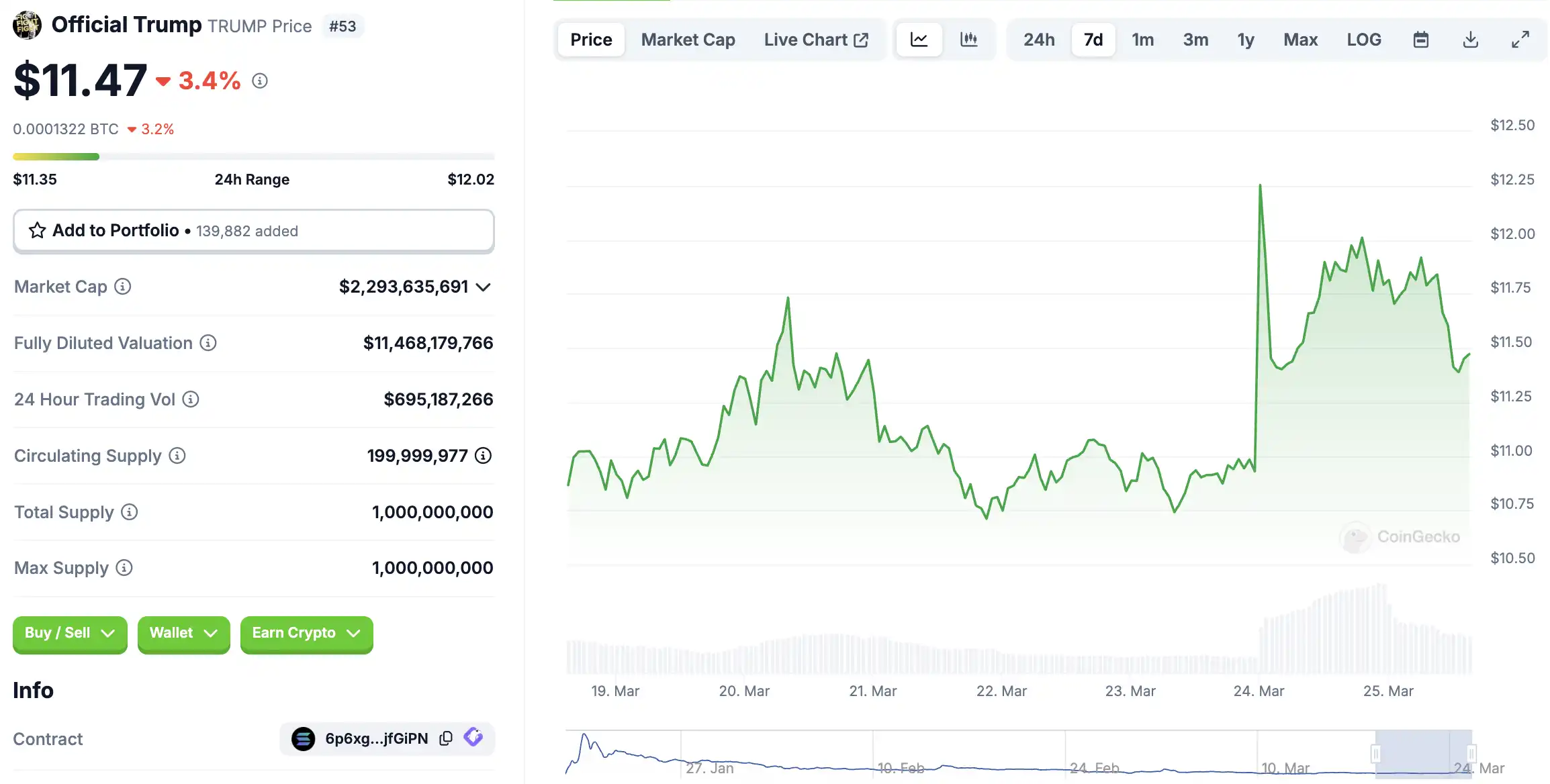
Related Read: "Is Trump Still Good News for the Crypto Community?"
As for USD1 itself, is its collateral mechanism transparent? When will the audit report be released? These key pieces of information have not been disclosed. Moreover, the outside world has been in constant controversy over WLFI and related conflicts of interest issues. Since the launch of the WLFI platform in September 2024, many operational details have never been made public. Its official website shows that Trump and some of his family members hold 60% of the company's shares. As of March 14, the project has completed two rounds of public token sales, raising a total of $550 million. According to the issuance document of the initial token sale of World Liberty, Trump and his related company, DT Marks DEFI LLC, will receive 75% of the net revenue as fees—meaning a profit of $390 million.
But perhaps the bigger question lies in Trump's true motives. Is his pro-crypto stance a genuine effort to drive industry development, or is it a case of "fishing in troubled waters" for his family's benefit? Can WLFI break free from the skepticism of "harvesting" and the stereotypical image of a "meme project" to truly become a builder in the DeFi space? The answer may only be judged by time.
You may also like

Cryptocurrency CEXs are flocking to sell US stocks, and traditional brokerages are facing an "uninvited guest."

Will the SpaceX IPO Hurt Bitcoin? Here's What Traders Are Watching
Foreign selling in the South Korean stock market accelerates, with cumulative net sales reportedly reaching $75 billion this year
On June 9, The Kobeissi Letter, citing Goldman Sachs data, reported that global investors are selling South Korean stocks at an unusually rapid pace. In the latest trading session, foreign investors sold about $801 million worth of Kospi constituent stocks again; total foreign outflows last week reached about $10 billion, and the market has been in net foreign selling on nearly every trading day over the past month. According to the data cited in the report, foreign investors have sold about $75 billion worth of South Korean stocks so far this year. Meanwhile, South Korean retail and institutional investors together recorded roughly $69 billion in net buying over the same period, suggesting that the market’s main buying support has come from domestic capital rather than returning overseas funds. The information currently disclosed still mainly comes from The Kobeissi Letter’s retelling and Goldman Sachs data summaries, while public details on the statistical period and the specific definition of “selling” remain relatively limited.

Fortune Warns of Strategy’s Financing Structure Risks as Bitcoin Premium Narrows
Fortune warned that Strategy’s Bitcoin treasury model faces growing financing risks as MSTR’s net asset premium narrows and preferred stock dividend pressure increases.

Ferrari Challenge Le Mans: Carl Moon to Dominate in WEEX Livery

Sahara AI Responds to SAHARA’s Sharp Drop: No Contract or Product Security Issues Found, Internal Investigation Underway
Sahara AI responded to SAHARA’s 60% price drop, saying no token contract or product security issues have been found and an internal investigation is underway.

WEEX Deposit/Withdrawal Dynamic Island: Your Asset Status, Always in Sight

Scaling Crypto Derivatives: The Digital Asset Infrastructure Behind High-Volume Trading
In the fast-moving digital asset ecosystem, derivatives platforms face an extreme architectural test. High-leverage futures markets demand more than just standard security—they require absolute operational precision, zero-latency matching engines, and ironclad structural scalability, all while navigating intense market volatility.
As global platforms scale to meet these demands, the industry is shifting away from rigid, monolithic setups toward a more agile, "decoupled" infrastructure philosophy.
The Blueprint for High-Volume Copy TradingFor elite global exchanges like WEEX (founded in 2018), this architectural choice becomes critical when scaling high-volume retail features like social copy trading. When thousands of users automatically mirror the real-time strategies of elite traders simultaneously, it triggers sudden, monumental spikes in concurrent transactional volume.
To prevent execution latency or settlement bottlenecks during these peak volatility events, a platform's primary engine must remain entirely dedicated to risk management, copy-trade synchronization, and order matching.
The Architectural Rule: New-generation platforms must separate front-end user execution engines from heavy backend infrastructural overhead to eliminate operational friction.
By separating these layers, platforms can maintain complete sovereignty over their trading environments and user experiences while strategically aligning with institutional-grade infrastructure ecosystems. This strategic framework allows modern exchanges to leverage advanced Digital Asset Custody infrastructure such as Cobo’s behind the scenes, ensuring that backend wallet management scales elastically alongside trading spikes.
Capitalizing on Market Momentum and 400× LeverageIn a derivatives arena where platforms offer up to 400× leverage on perpetual contracts, capital efficiency and market agility are core business metrics. To capture market momentum, an exchange needs the ability to rapidly expand its asset offerings, supporting everything from legacy crypto assets to sudden, trending altcoins across a massive library of trading pairs.
Adopting a flexible, scalable Wallet-as-a-Service (WaaS) solution such as Cobo’s could completely rewrite the development timeline for high-growth exchanges. Instead of spending months of engineering capital building out custom backend wallet architectures for every new blockchain network, platforms can deploy localized infrastructure in days.
This agility allows platforms to instantly scale their listings to over a thousand trading pairs without compromising security or delaying time-to-market. It mirrors the exact operational advantages seen during high-velocity market events, similar to how advanced wallet infrastructure empowers platforms during sudden asset surges; allowing exchanges to pass that speed and liquidity directly to their global user base.
A Mature Foundation for GrowthThe synergy between trusted infrastructure ecosystems and global trading platforms represents the natural evolution of a maturing crypto market. As WEEX continues to scale its global spot and derivatives offerings for over 6 million users, adopting robust backend paradigms proves that platforms no longer have to compromise between cutting-edge trading velocity and uncompromised structural security.

Morning Report | BitMine increased its holdings by 126,971 ETH last week; trader Eugene announced his exit from the crypto market

Wang Chuan: How can one not feel anxious after the neighbor Old Wang made thirty times profit by investing in storage stocks? (Seven) - A quarter-century cycle

Get Paid to Onboard? Try WEEX’s New Homepage with Rewards for Registration, Deposit & Trade

WEEX Custom Layout: Build Your Perfect Trading Workspace in Seconds

See “Buy Walls” & “Sell Walls” Instantly: WEEX Launches the Depth Chart for Smarter Trades

What Is Quick Trade on WEEX? 2 Ways WEEX Ends Chart-Panel Jumping
Morning News | Five major virtual asset platforms in South Korea have experienced 57 incidents of hacking and system failures in six years; Grayscale submits registration application for Canton ETF

Should we escape the peak? The principle of the tail-end market in the stock market

RootData: May 2026 Cryptocurrency Exchange Transparency Research Report

Founder of Baixing.com: My Experience with Claude Code in Fourteen Points
Cryptocurrency CEXs are flocking to sell US stocks, and traditional brokerages are facing an "uninvited guest."
Will the SpaceX IPO Hurt Bitcoin? Here's What Traders Are Watching
Foreign selling in the South Korean stock market accelerates, with cumulative net sales reportedly reaching $75 billion this year
On June 9, The Kobeissi Letter, citing Goldman Sachs data, reported that global investors are selling South Korean stocks at an unusually rapid pace. In the latest trading session, foreign investors sold about $801 million worth of Kospi constituent stocks again; total foreign outflows last week reached about $10 billion, and the market has been in net foreign selling on nearly every trading day over the past month. According to the data cited in the report, foreign investors have sold about $75 billion worth of South Korean stocks so far this year. Meanwhile, South Korean retail and institutional investors together recorded roughly $69 billion in net buying over the same period, suggesting that the market’s main buying support has come from domestic capital rather than returning overseas funds. The information currently disclosed still mainly comes from The Kobeissi Letter’s retelling and Goldman Sachs data summaries, while public details on the statistical period and the specific definition of “selling” remain relatively limited.
Fortune Warns of Strategy’s Financing Structure Risks as Bitcoin Premium Narrows
Fortune warned that Strategy’s Bitcoin treasury model faces growing financing risks as MSTR’s net asset premium narrows and preferred stock dividend pressure increases.
Ferrari Challenge Le Mans: Carl Moon to Dominate in WEEX Livery
Sahara AI Responds to SAHARA’s Sharp Drop: No Contract or Product Security Issues Found, Internal Investigation Underway
Sahara AI responded to SAHARA’s 60% price drop, saying no token contract or product security issues have been found and an internal investigation is underway.


